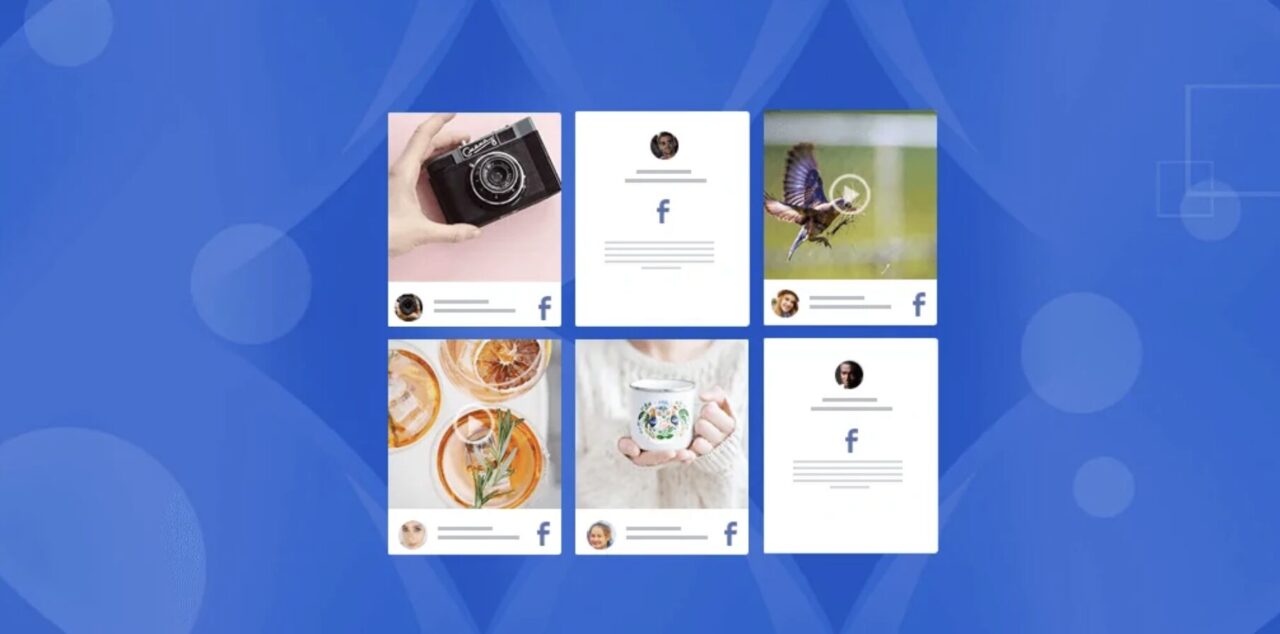
If you’ve ever embedded a Facebook feed widget on your website, you probably noticed that it is stuck like a pain thumb. Of course, it does the job – showing your latest posts, keeping your visitors employ and feeling your site feel more dynamic. However, if it is a collision with the website you carefully designed, it can be tears.
Good news! You can customize your Facebook widget to mix with the aesthetics of your brand. Let’s see how it can be shown to see how it was made for your website.
Why customize your Facebook widget?
Your website is an extension of your brand. Each element should feel combined with buttons and fonts starting from the color and font. If your Facebook feed widget looks out of the place it can disrupt the user’s experience and your site looks unchanged.
A good branded Facebook widget:
- Increases professional presence of your website
- Creates a series of brand experiences
- Social Content improves the busyness of feeling like a part of the site
So, how do you do it? Let’s get the At -Ust Customization in the fun part!
Step 1: Choose the correct Facebook widget
First, make sure you are using a widget that allows customization. Some widgets are rigid and do not offer too much flexibility, others (like a smash balloon or tagbox) allows you to tweet things to match your brand.
If you are using the official embed code of Facebook, you have less customization. But do not worry, we will cover some effectiveness!
Step 2: Match your colors
Most widgets will allow you to change the basic colors. Ideally, your Facebook widget matches the initial and secondary color of your website. If your site is minimal with a white background and soft pacel, a bright blue Facebook widget will be stuck like a neon mark in a library.
How to do this:
- If your widget has a built -in setting panel, look for “presence” or “style” options.
- Adjust background color, text color and link colors to be aligned with your website branding.
- If your widget does not change the color you can use CSS to override the default style. A little more!
Step 3: Choose the right format
The structure of your Facebook feed is important. A chaotic or badly decorated feed can make your site look messy. Choose a layout that fits naturally with the design of your website.
Options of format for consideration:
- Timeline Layout: A chronological feed of your posts shows – great for active pages.
- Grid Layout: Displays posts in perfectly interesting ways for media-heavy content.
- Carosel layout: Allow users to slide through posts Things are ideal for storing space while keeping interactive.
Check different layouts to see which one is best integrated with your website.
Step 4: Adjust the font
Is your Facebook widget a dead discount that was not designed for your site? The font does not match. If your website uses the Clean Suns-Seriff font like MontSett, your widget is a default Times New Roman appearance, it is about to feel it.
How to fix it:
- If there is a widget font customization option, update it to match the typography of your website.
- If this is not the case, use CSS to override the default font settings. Something like this:
.fb_iframe_widget span, .fb_iframe_widget span iframe {
    font-family: 'YourWebsiteFont', sans-serif !important;
}
Step 5: Tweet the interval
What is the spaceing! If your widget is cramped or has a bad padding, it will not look professional. Make sure it has enough breathing around it so that it does not feel squish against other components on your surface.
Quick solution:
- Adjust the padings and margins in the widget settings (if available).
- Use CSS to manually control the interval:
.fb_iframe_widget {
    margin: 20px 0;
}
Step 6: Hide unnecessary components
Facebook widgets often come with additional chaos – buttons, labels and branding that you don’t need. If it does not add value, get rid of it!
For example, you can hide the “Like” button in the “Facebook” branding or little CSS magic:
.fb_iframe_widget span iframe {
    display: none;
}
Step 7: Make it mobile-friendly
Your Facebook widget can look great on a desktop but what is the mobile? A weak optimized widget can make your entire layout in small screens.
To favorable for mobile:
- Make sure it is responsive-most of the widgets are in this built-in.
- Check it in the form of different screen and adjust it as needed.
- If needed, use media questions in your CSS to make the display subtle-ou:
@media (max-width: 768px) {
    .fb_iframe_widget {
        width: 100%;
        height: auto;
    }
}
Step 8: Examination and tweet
Once you customize everything, take a step back and review how your Facebook widget shows on your site. Ask yourself:
- Is it mixed with the rest of the design simultaneously?
- Is it easy to read and navigate?
- Does it work well on mobile?
Adjust it until it feels like the natural part of your website.
Final thought
Branding your Facebook widget should not be any work. With a few tweets, it was specially designed than the addition of the last minute to see it to see it.
By adjusting the color, font, layout and interval, you can ensure that your Facebook feed widget enhances the design of your site instead of disrupting the design of your site. Also, a well-integrated widget is employed by the audience and your site feels more dynamic-Win-Win!
So go ahead, play around with those settings, add some custom CSS and do that Facebook widget really to you!

Lucas Graphicsprint is a part of the content Writing team, which brings its marketing skills to the fore. With a degree in marketing, he crafts informative articles on social media, branding and logo design.


